In this article
If one of your AI vendors changed how much its agent is allowed to do without asking, would anyone in your company know that same week? For most of the leadership teams we talk to, the honest answer is no. Vendors are now shipping AI agent autonomy as the default setting, and that quietly changes who is making your oversight decisions.
The direct answer: when a vendor flips an agent from asking permission to acting on its own, your governance model changes even though nobody inside your business decided to change it. The fix is not to fight autonomy. It is to own the setting, match oversight to the consequence of each action, and stop relying on approval clicks that research shows rarely catch problems.
What Changed When Anthropic Made Auto Mode the Default?
Anthropic announced in August 2026 that Claude Code would start new sessions in auto mode by default. According to Anthropic's announcement, starting August 14, new sessions on Pro, Max, and Team plans run in auto mode, where each tool call is routed through a classifier aimed at blocking actions that are irreversible, destructive, or aimed outside your environment, instead of prompting the user. The company's October 22 update says auto mode remains opt-in for Claude Enterprise, the API, and its cloud-platform offerings for now, and that Anthropic plans to make it the default there as well, with Enterprise admins notified before the change.
This is one product, but the direction is industry-wide. The whole economic case for agentic AI depends on removing the friction of a human confirming every step. Expect more vendors to make the same move, often announced in release notes that nobody in operations reads. That is why this is a leadership question and not a developer setting.
Does Manual Review Actually Catch AI Agent Mistakes?
Mostly, it does not, and Anthropic's own data is the clearest evidence available. In a controlled experiment with 1,053 paid professional testers, human review caught just 13.6 percent of planted dangerous commands, while the automated classifier blocked 89 percent of the same commands. Testers blocked about 17 percent of dangerous commands early in a session, dropping to about 5 percent after 50 or more prior prompts, and Anthropic reports that users approve 97 percent of permission prompts in Claude Code.
That is the belief worth retiring. Many businesses treat the approval click as their safety net and assume that removing it is what creates risk. The data says the click was already a weak net. The real risk is that the oversight model changes by vendor decision while your business still believes a person is checking each step. We explored how this fatigue plays out in regulated workflows in our analysis of human-in-the-loop as a rubber stamp. Here the focus is narrower: what to do when the vendor removes the click for you.
Why a Default Change Is Really a Governance Change
Gartner's research gives a useful frame. In a May 2026 release on agent governance, the firm describes autonomy levels that run from Observe and Advise up to Act with Approval, where agents execute actions only after explicit human approval, and Act Autonomously, where agents operate within guardrails and humans review exceptions, logs, and aggregated outcomes rather than individual decisions. Gartner says the autonomous level requires the most rigorous governance: continuous monitoring, enforced guardrails, rapid rollback, circuit breakers that halt an agent on threshold violations, and clear ownership. It predicts that by 2027, 40 percent of enterprises will demote or decommission autonomous agents because governance gaps are found only after production incidents.
Read that against the auto mode change and the problem is plain. A default switch can move an agent from Act with Approval to Act Autonomously overnight. The governance requirements jump a full level, but no budget, owner, or monitoring arrives with the update. Gartner analyst Shiva Varma warns that applying the same controls to every agent produces two failure modes: over-restricting simple agents, which drives shadow development, or under-restricting autonomous ones, which raises operational, security, and compliance risk.
The encouraging part is that vendors are shipping the controls along with the defaults. Claude Code's permission modes documentation explains that three consecutive classifier blocks or 20 total blocks pause auto mode and resume prompting, and that administrators can set a default mode or disable auto mode entirely through managed settings. That is a built-in circuit breaker and an admin control. Neither helps a business where nobody has been assigned to know the settings exist.
Is This Just a Developer Problem?
No. Anthropic measured coding tasks, but the behavior underneath, attention fading as approval volume rises, applies to anyone approving agent output. A finance lead waving through agent-coded expenses, a support manager letting an agent issue refunds up to a limit, and an HR coordinator sending agent-drafted offer letters are running the same experiment, just without a planted error to reveal how thin the review is.
The 2026 Stack Overflow Developer Survey shows how widely people lean on verification as their backstop. In the survey's AI data, 26.2 percent of respondents use AI agents or automated workflows, 48 percent say they trust AI output when they can easily verify it, and only 6.6 percent trust it for important work decisions. Conditional trust sounds sensible until volume rises and "easily verify" stops being easy. Agents produce more output than any person can meaningfully recheck line by line.
Volume compounds in a second way. A step that is 95 percent reliable sounds strong. Chain ten of those steps into one workflow, a common shape for an agent handling intake, drafting, formatting, and sending, and simple multiplication says the whole sequence completes without an error only about 60 percent of the time. At 90 percent per step, a ten-step sequence runs clean about 35 percent of the time. That is arithmetic, not a forecast about any tool, and it is why fewer checkpoints put more weight on whatever oversight remains.
How Should Oversight Change When Agents Act on Their Own?
Oversight should shift from reviewing every action to deciding which actions deserve human judgment, and letting automated checks carry the volume. Anthropic's numbers point to a division of labor: software is better at catching dangerous patterns across thousands of routine steps, while people are better at judging consequence, context, and intent on the few actions that matter most. The table below shows how we help clients split that work.
| Agent action | Example | Primary check | Human role |
|---|---|---|---|
| Read-only or reversible | Summarizing tickets, drafting internal notes | Automated guardrails and logging | Periodic sampling of output quality |
| External but low value | Routine customer replies within a template | Automated policy checks | Spot checks and exception review |
| Financial or contractual | Refunds, payments, pricing changes | Hard limits enforced in the system | Approval by a rotating, named reviewer |
| Irreversible or high exposure | Deleting records, bulk data exports, access changes | Blocked by default | Explicit human decision every time |
Four decisions sit with leadership, not with whoever happens to configure the tool:
- Assign an owner for every agent platform's admin and managed settings, including watching vendor release notes for changes to defaults, the same way someone already owns patching.
- Classify each agent workflow by consequence and autonomy level, so a reporting agent and a refund agent are not governed identically.
- Measure how often reviewers actually reject or change agent output, and run occasional checks with a deliberately planted error to confirm the review step still works.
- Require a circuit breaker and rollback path for any workflow running autonomously, with a named person who can halt it.
Our earlier pieces on where risk hides in AI agent automation and on how long agents can now work unsupervised go deeper on scoping and on the pace of autonomy gains. The short version is that the supervision model has to be designed on purpose, a point we first made in asking who is supervising your AI intern.
Should This Slow Down Agent Adoption?
No. Auto mode caught most of what human reviewers missed, which is the strongest argument yet that automated checks and human judgment should cover different parts of the risk rather than the same part twice. The goal is not fewer agents. It is oversight that matches what each agent can actually do.
This is where AI governance becomes an operating habit rather than a policy document, the shift we described in why AI governance is becoming an operational discipline. It also means planning for the ordinary disruptions that break workflows, a theme from the coffee spill problem: when an autonomous agent hits something unexpected, someone has to know it happened and have the authority to stop it.
How Securafy Helps
From a business standpoint, the work starts with a simple inventory question: which agent tools in your environment have autonomy settings, who controls them, and what is each one set to today. We map that, set managed defaults that reflect the consequence of each workflow, and add vendor default changes to the same change-review rhythm that already covers patching and licensing.
Then we help you put the human effort where it pays off. That means hard limits on financial actions, named and rotating reviewers for high-stakes approvals, rejection-rate tracking instead of approval counts, and a short quarterly test with a planted error. The outcome is a business that can say with evidence what its agents are allowed to do and who would notice if something slipped through.
Where To Go From Here
Autonomy will keep arriving as a default, often in a release note. Find out this month which of your agent tools can act without approval and who in your business owns that setting, because that answer decides whether your oversight is designed or assumed.
If your team is moving faster with AI than your guardrails are, start with structured training rather than another tool. AI University gives your people role-based AI training with security built into the material, not bolted on afterward.
If you would rather talk through your specific environment first, book a strategy call with Securafy and we will walk your current AI usage, exposure, and the fastest path to safe adoption.
Not sure where you stand? Take the AI Readiness Assessment before you commit budget to tools.
Take the assessment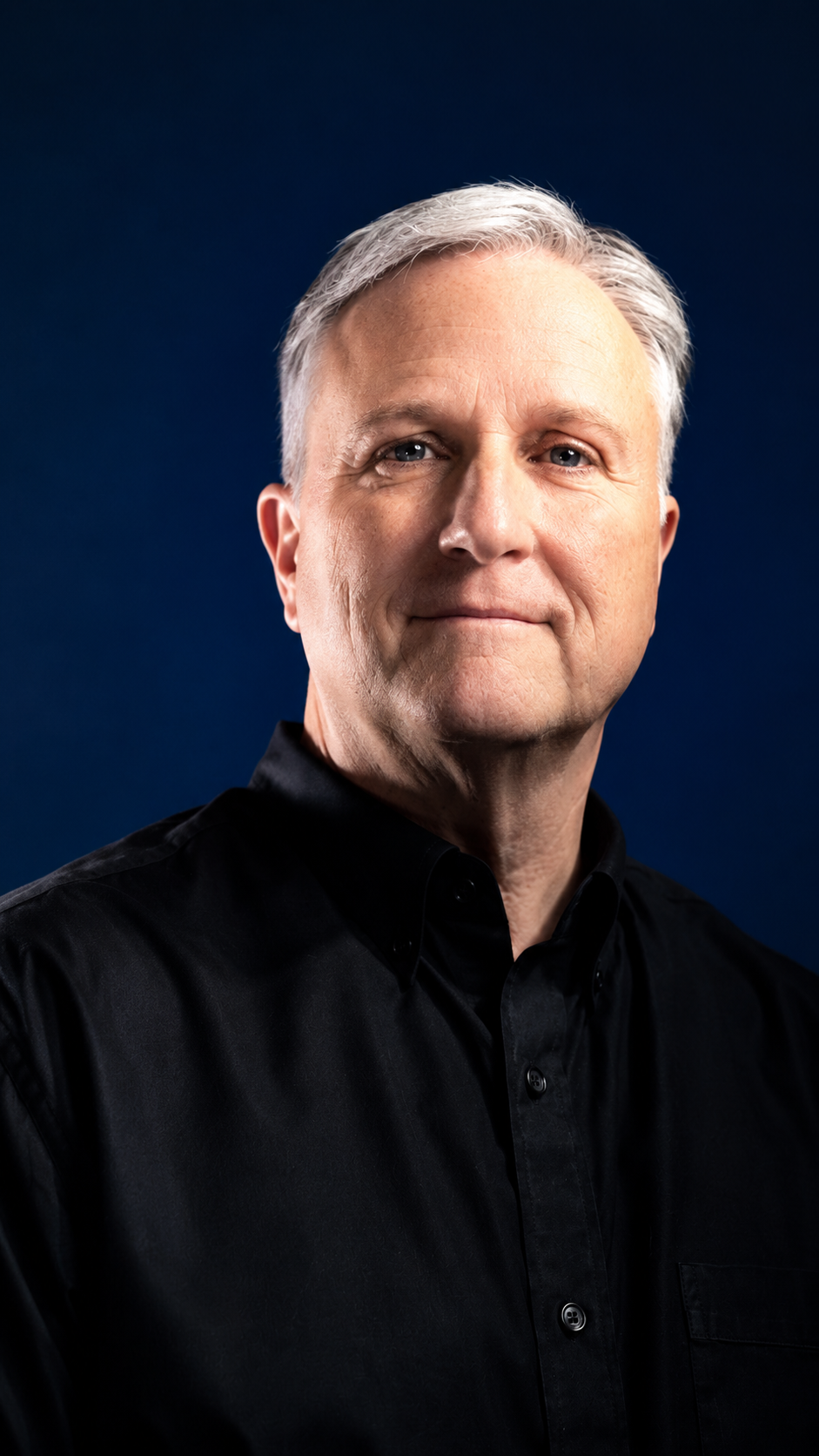
Randy Hall is the CEO and Founder of Securafy, with decades of experience helping organizations make smarter, safer decisions about technology.
A frequent speaker and instructor at national IT events, Randy has advised thousands of organizations, from startups and SMBs to large enterprises and U.S. government entities, on secure, practical technology adoption. He writes about the decisions business leaders are often expected to make without enough context, including cybersecurity, compliance, AI, cyber insurance, IT strategy, and business resilience.
Outside the office, you’ll often find Randy on Lake Erie enjoying time on his 38-foot Chris-Craft.
Writes about: Cybersecurity strategy, compliance, AI security, business resilience, cyber insurance, SMB risk, IT leadership
Join the conversation
Have a question or a different take on this? Add it below.