In this article
AI projects fail without CEO ownership because no governance policy or training program replaces a named person who is accountable for the result. McKinsey's 2025 State of AI research found that only 6 percent of companies report real, measurable bottom-line impact from AI. The gap almost always traces back to who owns the outcome at the top.
Why does CEO ownership decide whether AI pays off?
Because someone has to have the authority to redesign how a team actually works, not just approve a tool purchase. A CEO can tell a department to change its process around AI and make that change stick. A committee or a delegated AI lead usually cannot, and that authority gap is where most AI investment stalls before it reaches the bottom line.
We see the same pattern play out across client environments in nearly every industry we work with. The technology itself usually works fine in isolation. What breaks is the handoff between a pilot and a real business decision, and that handoff only happens cleanly when someone with actual authority owns it. The data backs up what we see on the ground, and it points in one direction consistently.
McKinsey's research on AI-driven EBIT impact backs this up directly. High performers, the small group of companies actually seeing financial results from AI, are far more likely to have redesigned core workflows around it rather than layering AI onto existing processes: nearly three-quarters of them rebuilt a workflow to fit how the technology actually works, compared with only about one in four among everyone else. Workflow redesign touches budgets, headcount, and who reports to whom, and that combination needs someone with the standing to make and defend the call.
What is the difference between AI oversight and AI ownership?
Oversight is a committee that reviews AI use after decisions get made. Ownership is a specific person who approved the deployment and answers for what it does, good or bad. Most companies we work with have plenty of the first and almost none of the second.
You can see this gap play out the same way in client environment after client environment. An AI governance committee exists on paper. A use policy sits in a shared drive somewhere. Then a customer complaint or a compliance question about an AI-driven decision actually lands, and three different people point to each other before anyone gives a straight answer about who is responsible.
Ask a CEO in a company with real ownership who is responsible for an AI agent that mishandles a customer refund, and you typically get a name inside a few seconds. Ask the same question in a company running on oversight alone, and you get a pause, then a reference to the AI committee, then silence. That pause is not just awkward. It shows up later as slower incident response, slower vendor negotiations, and slower decisions about whether to keep funding a pilot at all.
Why do most AI pilots never make it past proof of concept?
Because the business case behind them was never anyone's specific job to defend. Gartner projected that at least 30 percent of generative AI projects would be abandoned after proof of concept by the end of 2025, and named poor data quality, inadequate risk controls, escalating costs, and unclear business value as the leading causes.
Every one of those four causes is a decision someone should have owned before the pilot ever started, not a technical failure discovered afterward. Data quality is a data governance decision, risk controls are a risk tolerance decision, and cost overruns and unclear value are budget decisions. All four sit squarely in executive territory, and all four get treated as IT problems in companies where nobody owns AI at the top.
Gartner's research also found that generative AI deployment costs commonly range from $5 million to $20 million depending on the approach a company takes, with none of the predictable pricing patterns that come with more mature technology categories. A pilot at that price only survives a serious budget review if someone with real spending authority decided it was worth defending in front of the board, not because a project team liked the early results.
The scale of the miss is larger than most leadership teams realize. MIT NANDA's State of AI in Business 2025 report found that 95 percent of organizations are getting zero measurable return on an estimated $30 to $40 billion in enterprise generative AI spending. The report's authors point to a specific cause: most deployed systems don't retain feedback, adapt to context, or improve with use, so they stall out as a novelty rather than becoming a real part of the workflow. That is a product decision and a workflow decision, not a training gap, and it needs an owner with enough authority to kill or redesign a tool that isn't learning.
Closing that gap usually means redesigning how a specific team works, not buying a different model or a newer chatbot. Securafy's AI services team works through that redesign with clients directly, starting from the workflow a CEO actually wants changed rather than the tool a vendor happens to be selling that quarter.
Who ends up owning AI risk when something goes wrong?
The company that deployed the AI system, not the vendor that built it. Harvard Business Review's analysis of outsourced AI risk found that accountability consistently lands on the organization closest to the end user, regardless of who built the underlying model.
The article points to lawsuits against Peloton, iTutorGroup, Workday, and Cigna as examples of companies held responsible for algorithmic discrimination and mishandled data produced by AI systems they did not build themselves. A vendor contract does not transfer legal or reputational accountability. It only transfers development work.
If you do not currently know which AI tools touch customer or financial data in your environment, that is the place to start before you assign an owner to anything. Securafy's cybersecurity assessment is built to surface exactly that kind of exposure, including shadow AI tools employees adopted on their own without IT ever approving them.
What does real CEO ownership of AI actually look like?
It looks like specific commitments a CEO can state out loud, not a mission statement about innovation. Boston Consulting Group's research on the widening AI value gap found that companies generating significant financial return from AI share one trait before any technology decision gets made: an explicit, visible commitment from top management that gets translated into how the business actually runs, not just a line in a strategy deck.
In practice, that commitment shows up as a short list of things the CEO personally knows and controls:
- They can name which AI systems currently touch customer or financial data, without needing to check with IT first.
- They have set the risk tolerance for automated decisions, including exactly where an AI agent is and is not allowed to act without a human reviewing it first.
- They tie AI budget to a specific workflow outcome they can describe in one sentence, not a general productivity goal.
- They know who gets called first if an AI system makes an error that reaches a customer or a regulator.
BCG found that companies operating with this level of clarity, what the firm calls future-built companies, generate five times the revenue increase and three times the cost reduction of everyone else running AI initiatives without it. That performance gap has less to do with which model or vendor a company picked and more to do with whether leadership actually owned the decision to change how work gets done. Boards are already comfortable asking pointed questions about cybersecurity risk ownership, and they are catching up quickly on AI. A CEO who cannot answer the AI ownership question as fluently as the cybersecurity version of it should expect to be asked why.
How should you structure AI accountability before the next initiative?
Most companies default into a delegated model without ever deciding to. Naming an owner means deliberately choosing the alternative, across every decision that currently gets made by committee or by default.
| Decision area | Delegated by default | Owned by the CEO |
|---|---|---|
| Risk tolerance | Set informally, inconsistently across teams | Set explicitly, tied to overall business risk appetite |
| Budget approval | Tied to tool or license cost | Tied to a named workflow outcome |
| Escalation path | Unclear, multiple possible owners | One named person, no ambiguity |
| Vendor accountability | Assumed to sit with the vendor | Understood to sit with the company |
| Board reporting | AI mentioned informally, if at all | AI risk reported like cybersecurity risk |
That vendor accountability question comes up early in almost every AI purchase decision, which is why it belongs in the same conversation as your broader security vendor strategy rather than a separate one. Securafy's 2026 cybersecurity buyer's guide covers the questions worth asking any vendor, AI tools included, before you sign anything.
None of this requires the CEO to write prompts or review model architecture. It requires treating AI risk the way you already treat financial risk or legal risk: as something that sits on your desk, gets a name attached to it, and gets reported on like anything else the board expects you to manage. Delegating that responsibility away does not remove the risk. It just removes your visibility into it until a customer, an auditor, or a regulator finds it for you.
Companies that skip this step keep running pilots. Companies that own it keep running the business, because the AI initiatives that survive past year one are the ones somebody senior enough was willing to defend, fund properly, and answer for when a workflow changed and something went wrong along the way.
Where To Go From Here
Ownership starts with knowing exactly what AI is already running in your business and who answers for it. Get that visibility first, then decide who owns each piece of it, rather than assigning accountability to a system nobody has actually mapped yet.
If your team is moving faster with AI than your guardrails are, start with structured training rather than another tool. Securafy AI University gives your people role-based AI training with security built into the material, not bolted on afterward.
If you would rather talk through your specific environment first, book a strategy call with Securafy and we will walk your current AI usage, exposure, and the fastest path to safe adoption.
Not sure where you stand? Take the AI Readiness Assessment before you commit budget to tools.
Take the assessment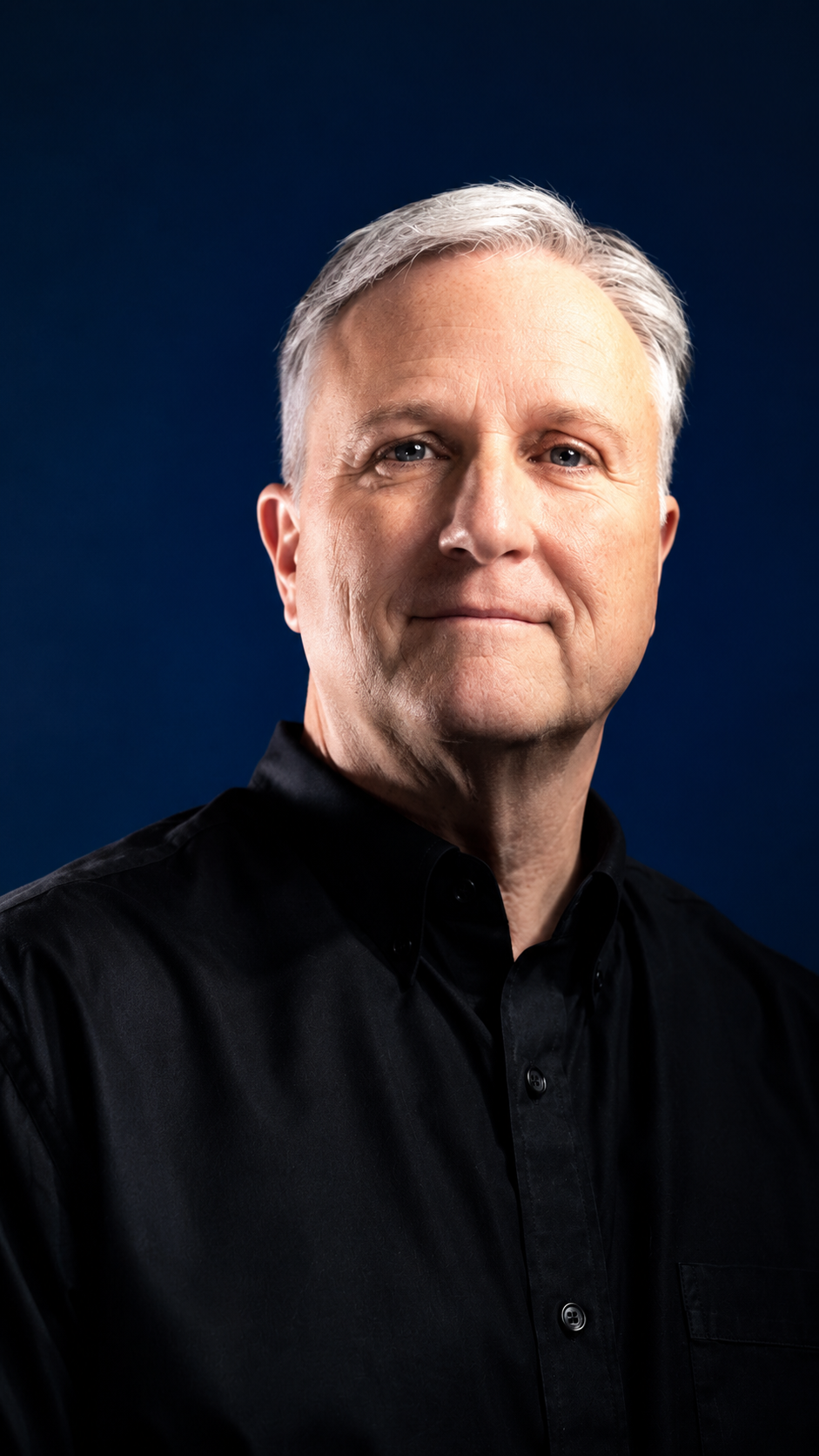
Randy Hall is the CEO and Founder of Securafy, with decades of experience helping organizations make smarter, safer decisions about technology.
A frequent speaker and instructor at national IT events, Randy has advised thousands of organizations, from startups and SMBs to large enterprises and U.S. government entities, on secure, practical technology adoption. He writes about the decisions business leaders are often expected to make without enough context, including cybersecurity, compliance, AI, cyber insurance, IT strategy, and business resilience.
Outside the office, you’ll often find Randy on Lake Erie enjoying time on his 38-foot Chris-Craft.
Writes about: Cybersecurity strategy, compliance, AI security, business resilience, cyber insurance, SMB risk, IT leadership
Join the conversation
Have a question or a different take on this? Add it below.